

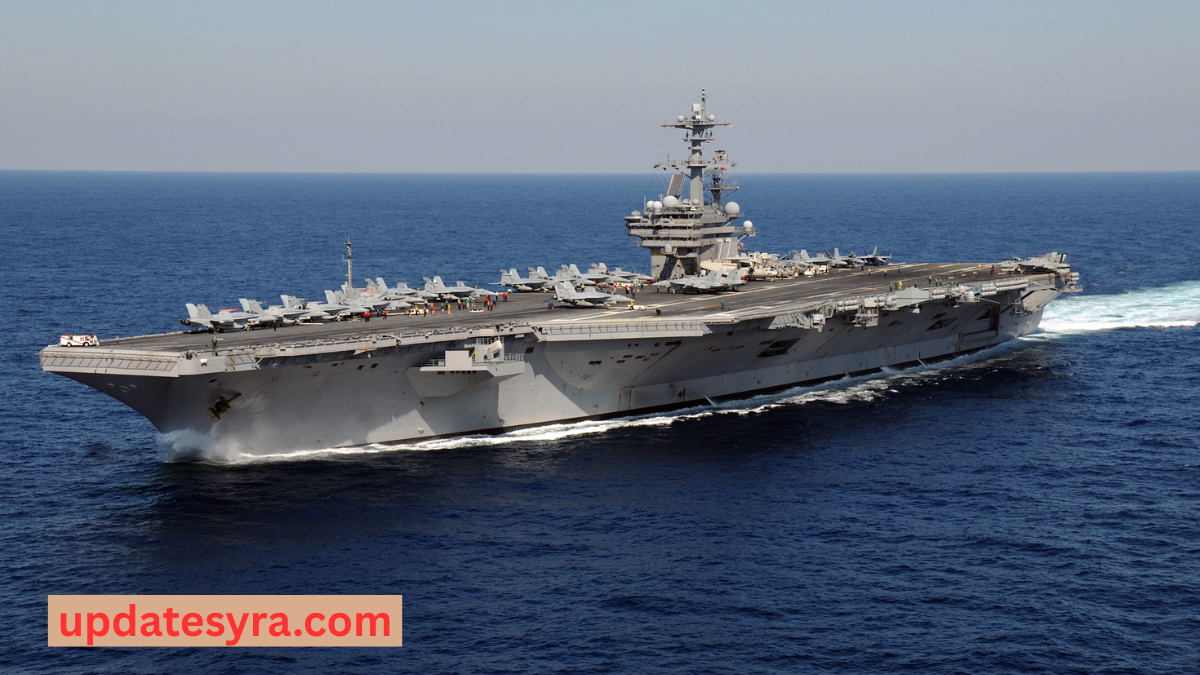
The Bush Aircraft Carrier represents one of the most advanced and powerful naval assets ever built by the United States. Officially known as the USS George H.W. Bush (CVN-77), this floating airbase is a cornerstone of modern maritime dominance. Designed to project military strength across global waters, it combines cutting-edge engineering, nuclear propulsion, and advanced aviation systems into a single, massive warship capable of reshaping the balance of power at sea.
The Bush Aircraft Carrier is more than just a vessel; it is a mobile military city. Stretching over 1,000 feet in length and capable of carrying thousands of personnel, it serves as a fully operational air station at sea. Its primary role is to deploy and support carrier-based aircraft for combat, surveillance, and strategic missions. This capability allows the United States Navy to respond rapidly to conflicts, humanitarian crises, or geopolitical tensions anywhere in the world.
What makes the Bush Aircraft Carrier especially significant is its dual role in warfare and diplomacy. While it is designed for combat readiness, it also acts as a deterrent, signaling strength and stability in international waters. Its presence alone can influence global negotiations and military strategies. As one of the last ships of the Nimitz-class series, it reflects decades of innovation in naval architecture and defense technology.
The story of the Bush Aircraft Carrier begins with the long evolution of U.S. naval engineering and the Nimitz-class carrier program. Developed during the Cold War, this class of aircraft carriers was designed to ensure American naval superiority across the world’s oceans. The USS George H.W. Bush, commissioned in 2009, represents one of the most refined versions of this legendary class, incorporating decades of improvements in technology, efficiency, and survivability.
Named after the 41st President of the United States, George H.W. Bush, who served as a naval aviator during World War II, the carrier carries a deep historical significance. Its construction marked a symbolic bridge between past military service and modern naval innovation. Built at the Newport News Shipbuilding facility in Virginia, the vessel took years of precision engineering before its official commissioning into active service.
Since entering service, the Bush Aircraft Carrier has participated in numerous missions, including global security operations, joint military exercises, and humanitarian assistance efforts. Its deployments have taken it across the Atlantic Ocean, the Mediterranean Sea, and the Middle East, where it has played a vital role in maintaining stability and supporting allied forces. Over time, it has proven itself as a reliable and adaptable platform for modern naval warfare.
The Bush Aircraft Carrier is a marvel of modern engineering, designed to operate continuously for decades without refueling due to its nuclear propulsion system. This allows it to remain at sea for long durations, limited only by food and maintenance requirements. Its massive flight deck serves as a runway for launching and recovering aircraft, using steam catapults and advanced arresting gear systems that ensure smooth and efficient air operations.
Internally, the ship is structured like a floating city, complete with hangars, maintenance facilities, command centers, and living quarters. Thousands of crew members work in synchronized operations to maintain flight readiness, manage logistics, and operate complex systems. The carrier is also equipped with advanced radar, navigation, and communication systems that allow it to coordinate large-scale missions with precision.
In terms of combat capability, the Bush Aircraft Carrier carries a full Carrier Air Wing, consisting of fighter jets, electronic warfare aircraft, and reconnaissance planes. These aircraft provide a wide range of offensive and defensive capabilities, from air superiority missions to strike operations deep within enemy territory. The carrier also includes defensive systems designed to protect it from missile threats, submarines, and aerial attacks, ensuring it remains secure in hostile environments.
The Bush Aircraft Carrier plays a central role in U.S. naval strategy, acting as both a deterrent and a rapid response platform. Its ability to project air power anywhere in the world makes it a critical tool for maintaining global stability. Whether responding to conflicts, supporting allies, or conducting surveillance operations, the carrier ensures that the United States maintains a visible and effective presence on the world stage.
Beyond warfare, the Bush Aircraft Carrier also contributes to humanitarian missions. It has been deployed in disaster relief operations, providing medical assistance, logistics support, and emergency supplies to affected regions. Its ability to quickly mobilize and operate independently makes it an invaluable asset during natural disasters such as hurricanes, earthquakes, and floods.
Strategically, the presence of the carrier in international waters sends a strong message of deterrence. It discourages potential conflicts while reinforcing alliances with partner nations. In modern geopolitics, where naval power plays a crucial role in trade routes and security, the Bush Aircraft Carrier remains a key instrument of influence and stability.
The Bush Aircraft Carrier stands as one of the most impressive achievements in naval engineering and military strategy. It represents decades of innovation, combining speed, power, endurance, and versatility into a single platform. As global security challenges continue to evolve, the importance of such carriers only grows stronger.
More than just a warship, the Bush Aircraft Carrier symbolizes technological excellence and national strength. It reflects the ability of modern engineering to create machines that can operate independently across oceans while supporting complex military operations. Its legacy will continue to shape naval warfare for years to come, serving as a benchmark for future aircraft carrier designs.